

Blog
MushroomsLab-Difference Between Ecstasy and MDMA: A Comprehensive Guide
Apr
When exploring the difference between ecstasy and MDMA, it’s crucial to understand that these terms are often used interchangeably despite important distinctions. The difference between ecstasy and MDMA has been a topic of confusion for decades, with many people mistakenly believing they are entirely separate substances. This comprehensive guide will examine the difference between ecstasy and MDMA while addressing various related aspects of these substances.
Understanding the difference between ecstasy and MDMA requires looking beyond surface-level assumptions and examining the chemical, cultural, and legal contexts. The difference between ecstasy and MDMA ultimately reveals more about drug markets and perception than about actual chemical variations. Throughout this exploration of the difference between ecstasy and MDMA, we’ll clarify misconceptions and provide accurate information about these substances.
Understanding the Core Difference Between Ecstasy and MDMA
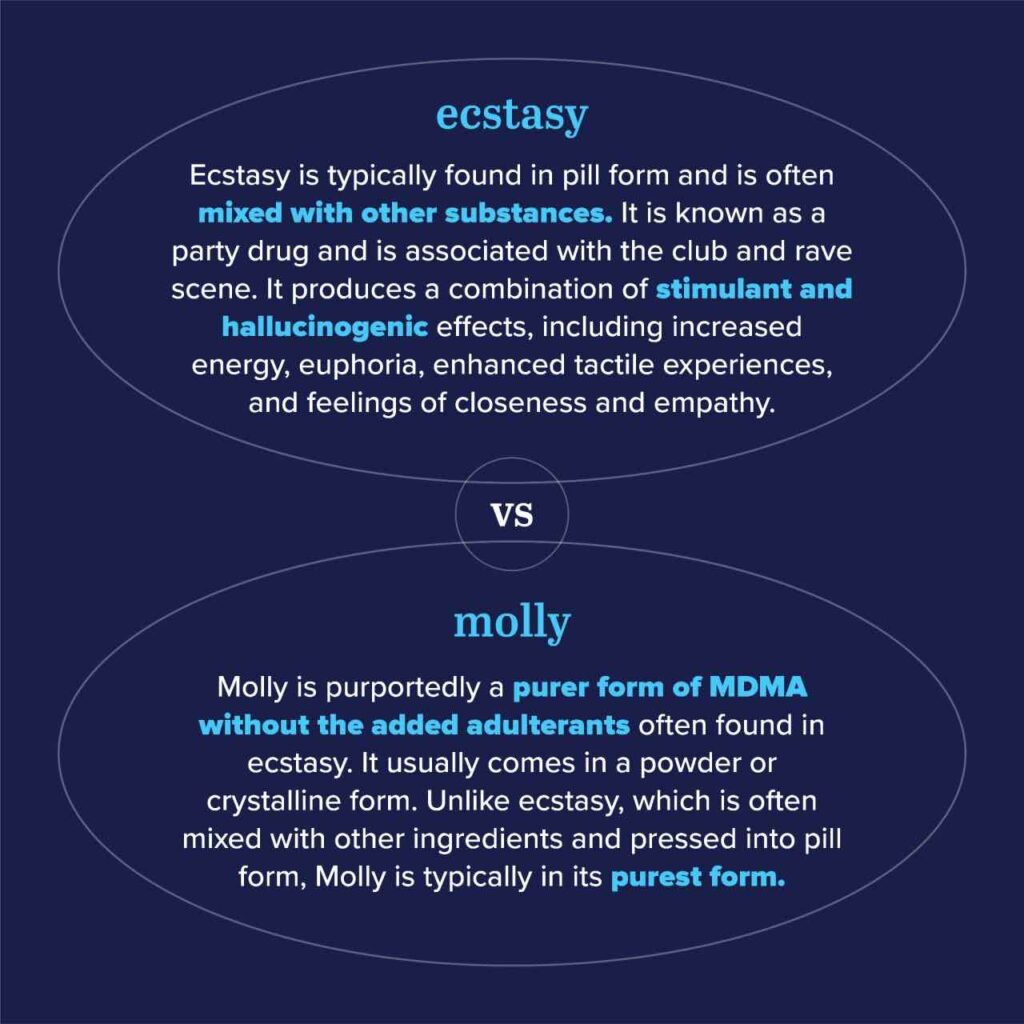
The fundamental difference between ecstasy and MDMA begins with terminology and purity. MDMA is the chemical name for 3,4-methylenedioxymethamphetamine, while ecstasy is a street name for tablets that may or may not contain pure MDMA. The difference between ecstasy and MDMA is essentially that MDMA refers to the pure chemical compound, while ecstasy refers to a product that often contains MDMA mixed with other substances. This critical difference between ecstasy and MDMA affects everything from user experience to safety profiles. When examining the difference between ecstasy and MDMA, it’s important to recognize that ecstasy tablets typically have low purity due to bulking agents that are added to dilute the drug and increase profits.
The difference between ecstasy and MDMA extends to how these substances are perceived in different contexts. While researchers maintain that pure MDMA is distinct from ecstasy, some argue that the difference between ecstasy and MDMA hangs not on a distinction in substance, but on a distinction in safety that must be produced through controlled environments.
MDMA Crystals: The Pure Form
MDMA crystals represent what many consider the purest form of the substance. When examining the Dichotomy between ecstasy and MDMA, MDMA crystals often serve as the benchmark for purity. These crystalline structures contain the MDMA molecule in its most unadulterated form.
The difference between ecstasy and MDMA becomes particularly apparent when comparing MDMA crystals to pressed tablets. MDMA crystals typically appear as white or off-white crystalline formations that can be crushed into powder.
The Dichotomy between ecstasy and MDMA is highlighted by the fact that MDMA crystals lack the binding agents and fillers found in ecstasy tablets. When discussing the Dichotomy between ecstasy and MDMA, it’s important to note that MDMA crystals are often sold as Molly in various markets. The difference between ecstasy and MDMA in terms of MDMA crystals relates to both appearance and potential purity. MDMA crystals can be tested for authenticity using reagent testing kits, which helps address some concerns about the Dichotomy between ecstasy and MDMA.
Crystalized MDMA: Formation and Appearance
Crystalized MDMA refers to MDMA that has formed into crystalline structures during the synthesis process. The formation of crystalized MDMA is a natural result of the chemical reactions used to produce the substance. When examining the difference between ecstasy and MDMA, crystalized MDMA represents the unprocessed form before being pressed into tablets or sold as powder. The appearance of crystalized MDMA can vary from fine crystalline powder to larger rock-like formations.
The Distinction between ecstasy and MDMA is evident in how crystalized MDMA maintains its chemical integrity without the additives found in ecstasy tablets. Crystalized MDMA is often sought after by users who believe it represents a purer form of the substance. The difference between ecstasy and MDMA extends to how crystalized MDMA is typically consumed – often dissolved in liquid or taken in capsule form. Understanding crystalized MDMA is essential for grasping the full difference between ecstasy and MDMA.
MDMA Dependence: Understanding Addiction Potential
MDMA dependence is a serious concern that relates directly to the Distinction between ecstasy and MDMA. While some people believe MDMA is non-addictive, research shows that MDMA dependence can develop with regular use. The Distinction between ecstasy and MDMA affects MDMA dependence patterns because ecstasy users may develop dependence to unknown adulterants as well as MDMA itself. MDMA dependence manifests through both psychological and physiological components. The difference between ecstasy and MDMA becomes relevant when considering MDMA dependence because the unknown substances in ecstasy can create additional dependence risks. MDMA dependence symptoms include cravings, continued use despite negative consequences, and withdrawal symptoms when use is discontinued.
The Contrast between ecstasy and MDMA influences MDMA dependence treatment approaches, as ecstasy users may require additional support for multiple substance dependencies. MDMA dependence can develop even with what users believe is pure MDMA, highlighting that the difference between ecstasy and MDMA doesn’t eliminate addiction potential.
MDMA Rehab: Treatment Options
MDMA rehab provides specialized treatment for those struggling with substance use. The Contrast between ecstasy and MDMA affects MDMA rehab approaches because treatment may need to address multiple substances when ecstasy use is involved. MDMA rehab programs typically combine medical supervision, psychological counseling, and support groups. The Contrast between ecstasy and MDMA is important in MDMA rehab settings because patients may have different expectations based on what they thought they were using.
MDMA rehab addresses both the physical and psychological aspects of dependence. The difference between ecstasy and MDMA can complicate MDMA rehab when patients have used ecstasy containing unknown substances. MDMA rehab facilities offer various levels of care from outpatient to residential treatment. Understanding the difference between ecstasy and MDMA helps MDMA rehab professionals develop more effective treatment plans tailored to individual needs.
How Long Does MDMA Stay in System for Roadside Test?
How long does MDMA stay in system for roadside test is a common concern for users. The difference between ecstasy and MDMA affects how long does MDMA stay in system for roadside test because ecstasy may contain other substances with different detection windows. How long does MDMA stay in system for roadside test typically ranges from 2-4 days in urine for occasional users.
The Contrast between ecstasy and MDMA is relevant to how long does MDMA stay in system for roadside test because ecstasy users may test positive for additional substances. How long does MDMA stay in system for roadside test depends on factors like metabolism, frequency of use, and individual body chemistry.
The Contrast between ecstasy and MDMA can influence how long does MDMA stay in system for roadside test if ecstasy contains longer-lasting substances. How long does MDMA stay in system for roadside test is an important consideration for those facing drug testing. The Contrast between ecstasy and MDMA affects how long does MDMA stay in system for roadside test results because of potential adulterants in ecstasy.
MDMA Withdrawal: Symptoms and Timeline
MDMA withdrawal occurs when regular users discontinue use. The difference between ecstasy and MDMA affects MDMA withdrawal because ecstasy users may experience withdrawal from additional substances. MDMA withdrawal symptoms typically include depression, fatigue, anxiety, and difficulty concentrating. The difference between ecstasy and MDMA influences MDMA withdrawal severity and duration. MDMA withdrawal generally begins within 24-48 hours after last use and can last for several weeks.
The Contrast between ecstasy and MDMA is important in MDMA withdrawal management because ecstasy users may require more comprehensive treatment. MDMA withdrawal can be particularly challenging due to the depletion of serotonin and other neurotransmitters. The difference between ecstasy and MDMA affects MDMA withdrawal approaches, with ecstasy users potentially needing additional support. MDMA withdrawal symptoms highlight the physical and psychological dependence that can develop with regular use.
Treatment for MDMA Addiction: Professional Approaches
Treatment for MDMA addiction requires comprehensive approaches addressing both physical and psychological aspects. The Contrast between ecstasy and MDMA affects treatment for MDMA addiction because ecstasy users may have multiple substance dependencies. Treatment for MDMA addiction often begins with medical assessment and detoxification.
The difference between ecstasy and MDMA influences treatment for MDMA addiction protocols. Treatment for MDMA addiction typically includes cognitive behavioral therapy, group counseling, and sometimes medication for specific symptoms.
The difference between ecstasy and MDMA is considered in treatment for MDMA addiction planning. Treatment for MDMA addiction may also address co-occurring mental health conditions. The difference between ecstasy and MDMA can affect treatment for MDMA addiction duration and intensity. Treatment for MDMA addiction success rates improve with personalized approaches that consider individual substance use patterns.
Is MDMA Class A: Legal Status Explained
Is MDMA class A is a question about legal classification in many jurisdictions. The difference between ecstasy and MDMA doesn’t affect the answer to is MDMA class A because both are typically classified similarly. Is MDMA class A – yes, in the UK and many other countries, MDMA is classified as a Class A controlled substance.
The difference between ecstasy and MDMA is irrelevant to is MDMA class A because both fall under the same legal restrictions. Is MDMA class A in the US – MDMA is classified as a Schedule I substance, which is equivalent to Class A in other systems. The difference between ecstasy and MDMA doesn’t change their legal status.
Is MDMA class A affects penalties for possession and distribution. The difference between ecstasy and MDMA may influence how cases are prosecuted, but both carry serious legal consequences. Is MDMA class A – understanding this classification is essential for anyone considering use of these substances. The difference between ecstasy and MDMA does not provide any legal loopholes, as both are controlled substances.
How to Do MDMA: Consumption Methods
How to do MDMA encompasses various consumption methods that users employ. The difference between ecstasy and MDMA affects how to do MDMA because the form influences the method of administration. How to do MDMA typically involves oral consumption of tablets, capsules, or powder dissolved in liquid.
The difference between ecstasy and MDMA is significant when considering how to do MDMA safely. How to do MDMA also includes nasal insufflation of powder, though this method carries additional risks. The Discrepancy between ecstasy and MDMA influences how to do MDMA in terms of dosage accuracy.
How to do MDMA properly requires understanding dosage, purity, and potential risks. The difference between ecstasy and MDMA affects how to do MDMA because ecstasy tablets contain unknown quantities and potentially other substances. How to do MDMA responsibly includes testing substances, starting with low doses, and avoiding dangerous combinations. The difference between ecstasy and MDMA is a crucial consideration in how to do MDMA with minimal harm.
MDMA Rehabilitation: Recovery Process
MDMA rehabilitation provides structured support for those seeking to overcome substance dependence. The Discrepancy between ecstasy and MDMA affects MDMA rehabilitation because treatment may need to address multiple substance use.
MDMA rehabilitation typically begins with assessment and detoxification. The Discrepancy between ecstasy and MDMA influences MDMA rehabilitation program design. MDMA rehabilitation includes various therapeutic approaches like cognitive behavioral therapy, motivational interviewing, and group counseling.
The Discrepancy between ecstasy and MDMA is important in MDMA rehabilitation because ecstasy users may have additional complications from unknown adulterants. MDMA rehabilitation programs may be inpatient or outpatient depending on individual needs.
The difference between ecstasy and MDMA affects MDMA rehabilitation duration and intensity. MDMA rehabilitation success often depends on comprehensive aftercare planning. The difference between ecstasy and MDMA requires individualized approaches in MDMA rehabilitation settings.
Withdrawal Symptoms MDMA: What to Expect
Withdrawal symptoms MDMA can be challenging for regular users discontinuing use. The difference between ecstasy and MDMA affects withdrawal symptoms MDMA because ecstasy users may experience additional withdrawal from other substances.
Withdrawal symptoms MDMA typically include depression, anxiety, fatigue, irritability, and difficulty concentrating. The Variation between ecstasy and MDMA influences the severity and duration of withdrawal symptoms MDMA. Withdrawal symptoms MDMA can last from several days to weeks, depending on usage patterns.
The difference between ecstasy and MDMA is relevant to withdrawal symptoms MDMA management. Withdrawal symptoms MDMA may also include sleep disturbances, changes in appetite, and decreased libido. The difference between ecstasy and MDMA can complicate withdrawal symptoms MDMA when ecstasy contains additional substances.
Withdrawal symptoms MDMA highlight the physical and psychological dependence that can develop with regular use. The Variation between ecstasy and MDMA affects withdrawal symptoms MDMA treatment approaches.
ADHD and MDMA: Potential Interactions
ADHD and MDMA interactions are a concern for those with attention deficit hyperactivity disorder. The Variation between ecstasy and MDMA affects ADHD and MDMA interactions because ecstasy may contain additional substances. ADHD and MDMA can have complex interactions due to their effects on neurotransmitters like dopamine and norepinephrine.
The difference between ecstasy and MDMA is important in understanding ADHD and MDMA risks. ADHD and MDMA interactions may include increased cardiovascular strain and altered mental health effects. The difference between ecstasy and MDMA affects ADHD and MDMA safety considerations.
ADHD and MDMA may also interact with medications used to treat ADHD, such as stimulants. The difference between ecstasy and MDMA influences ADHD and MDMA risk assessment. ADHD and MDMA use requires careful consideration and medical consultation. The difference between ecstasy and MDMA affects ADHD and MDMA interaction profiles.
MDMA Detox: Cleansing the Body
MDMA detox is the process of eliminating the substance from the body. The difference between ecstasy and MDMA affects MDMA detox because ecstasy users may need to detox from additional substances. MDMA detox typically involves managing withdrawal symptoms while the body clears the drug. The difference between ecstasy and MDMA influences MDMA detox protocols. MDMA detox can be done at home for mild cases or in medical facilities for more severe dependence.
The difference between ecstasy and MDMA is important in MDMA detox planning. MDMA detox may include hydration, nutritional support, and medications for specific symptoms. The difference between ecstasy and MDMA affects MDMA detox duration and intensity. MDMA detox is often the first step in a comprehensive treatment program. The difference between ecstasy and MDMA requires individualized MDMA detox approaches.
Microdosing MDMA: Potential Benefits and Risks
Microdosing MDMA involves taking very small amounts of the substance. The difference between ecstasy and MDMA affects microdosing MDMA because accurately measuring small doses is easier with pure MDMA. Microdosing MDMA typically involves taking 1/10th to 1/20th of a recreational dose. The difference between ecstasy and MDMA is significant for microdosing MDMA safety and accuracy. Microdosing MDMA is sometimes explored for potential therapeutic benefits like mood enhancement and increased focus.
The difference between ecstasy and MDMA influences microdosing MDMA effectiveness. Microdosing MDMA carries risks including potential neurotoxicity and unknown long-term effects. The difference between ecstasy and MDMA affects microdosing MDMA purity concerns. Microdosing MDMA requires careful measurement and consideration of potential risks. The difference between ecstasy and MDMA makes microdosing MDMA potentially more dangerous with ecstasy due to unknown adulterants.
Can You Overdose on MDMA: Understanding the Risks
Can you overdose on MDMA is a critical question for users. The difference between ecstasy and MDMA affects the answer to can you overdose on MDMA because ecstasy may contain more dangerous substances. Can you overdose on MDMA – yes, overdose is possible, particularly with high doses or when combined with other substances.
The Variation between ecstasy and MDMA influences can you overdose on MDMA risks. Can you overdose on MDMA symptoms include hyperthermia, seizures, irregular heartbeat, and loss of consciousness. The Variation between ecstasy and MDMA is important for can you overdose on MDMA prevention.
Can you overdose on MDMA becomes more likely when users mistake purity or potency. The Variation between ecstasy and MDMA affects can you overdose on MDMA likelihood because ecstasy tablets vary widely in MDMA content. Can you overdose on MDMA requires immediate medical attention. The Variation between ecstasy and MDMA doesn’t eliminate overdose potential, though ecstasy may carry additional risks from adulterants.
Difference Between Ecstasy and MDMA: Chemical Composition
The difference between ecstasy and MDMA in chemical terms is significant. MDMA is the pure chemical compound 3,4-methylenedioxymethamphetamine, while ecstasy is a tablet formulation that may contain MDMA along with other substances. The Disparity between ecstasy and MDMA chemically is that ecstasy often includes fillers, binders, and sometimes other psychoactive substances. The Variation between ecstasy and MDMA affects purity and predictability of effects.
The Distinction between ecstasy and MDMA is particularly important for users seeking specific effects. The Disparity between ecstasy and MDMA in chemical composition explains why experiences can vary widely with ecstasy. The Distinction between ecstasy and MDMA also influences potential risks and side effects. The Disparity between ecstasy and MDMA chemically means that purity testing is particularly important for ecstasy tablets.
Distinction Between Ecstasy and MDMA: Historical Context
The Variation between ecstasy and MDMA has evolved over time. MDMA was first synthesized in 1912 and later explored for therapeutic use before becoming popular recreationally. The Variation between ecstasy and MDMA emerged as MDMA was formulated into tablets and sold as ecstasy in the 1980s. The difference between ecstasy and MDMA reflects changing drug markets and cultural contexts. The difference between ecstasy and MDMA historically relates to how these substances were marketed and consumed.
The Variation between ecstasy and MDMA has shifted as purity levels and formulations changed over decades. The difference between ecstasy and MDMA today differs from the historical difference between ecstasy and MDMA when ecstasy first appeared. Understanding the historical difference between ecstasy and MDMA provides context for current perceptions and use patterns.
Difference Between Ecstasy and MDMA: Cultural Perceptions
The difference between ecstasy and MDMA is reflected in cultural perceptions. MDMA is often viewed more scientifically, while ecstasy carries stronger cultural associations with rave and dance scenes. The difference between ecstasy and MDMA in cultural context affects how these substances are portrayed and understood. The difference between ecstasy and MDMA is reinforced by media representations and social narratives. The difference between ecstasy and MDMA cultural perceptions influence user expectations and behaviors.
The difference between ecstasy and MDMA in cultural terms affects how different communities approach these substances. The difference between ecstasy and MDMA cultural context also impacts policy and legal responses. The difference between ecstasy and MDMA continues to evolve as cultural attitudes shift.
Difference Between Ecstasy and MDMA: Safety Considerations
The space between ecstasy and MDMA has important safety implications. The space between ecstasy and MDMA affects risk assessment because ecstasy’s unknown contents create additional dangers. The Divergence between ecstasy and MDMA influences harm reduction approaches. The difference between ecstasy and MDMA is crucial for users seeking to minimize risks. The Divergence between ecstasy and MDMA affects the reliability of dosing and predictability of effects. The Divergence between ecstasy and MDMA safety considerations include testing substances, starting with low doses, and avoiding dangerous combinations.
The Divergence between ecstasy and MDMA means that ecstasy users may face additional health risks from adulterants. The difference between ecstasy and MDMA requires different harm reduction strategies. The difference between ecstasy and MDMA safety profile highlights the importance of substance education and awareness.
Divergence Between Ecstasy and MDMA: Legal Implications
The gap between ecstasy and MDMA has legal consequences despite similar classifications. The gap between ecstasy and MDMA legally is minimal in terms of penalties, as both are typically controlled substances. The gap between ecstasy and MDMA in legal contexts may affect how cases are prosecuted and perceived. The space between ecstasy and MDMA doesn’t provide legal advantages for either form. The space between ecstasy and MDMA legally relates to how these substances are defined in controlled substance laws. The space between ecstasy and MDMA may affect sentencing guidelines in some jurisdictions.
The difference between ecstasy and MDMA legal status reinforces the need for caution and awareness. The difference between ecstasy and MDMA legally means both carry serious potential consequences for possession and distribution.
Difference Between Ecstasy and MDMA: Health Effects
The gap between ecstasy and MDMA manifests in health effects. While pure MDMA has a known health effect profile, ecstasy’s variable contents create additional risks. The Unlikeness between ecstasy and MDMA affects short-term effects like euphoria, energy, and empathy. The Unlikeness between ecstasy and MDMA also influences long-term health consequences. The Unlikeness between ecstasy and MDMA health effects include impacts on serotonin systems, cardiovascular function, and mental health. The Unlikeness between ecstasy and MDMA means that ecstasy users may experience effects from unknown substances.
The gap between ecstasy and MDMA health considerations require awareness of both known and potential risks. The difference between ecstasy and MDMA affects medical treatment approaches when adverse reactions occur. The difference between ecstasy and MDMA health profile underscores the importance of harm reduction practices.
Variance Between Ecstasy and MDMA: Purity Testing
The difference between ecstasy and MDMA highlights the importance of purity testing. The difference between ecstasy and MDMA makes testing particularly crucial for ecstasy tablets. The difference between ecstasy and MDMA can be partially addressed through reagent testing kits that detect MDMA presence. The difference between ecstasy and MDMA testing helps users make more informed decisions. The difference between ecstasy and MDMA purity concerns have led to increased availability of testing services.
The Variance between ecstasy and MDMA testing limitations include inability to detect all possible adulterants. The Variance between ecstasy and MDMA testing represents an important harm reduction strategy. The Variance between ecstasy and MDMA purity testing empowers users to better understand what they’re consuming.
Variance Between Ecstasy and MDMA: Therapeutic Potential
The Gap between ecstasy and MDMA affects therapeutic research and applications. Pure MDMA is being studied for therapeutic uses, while ecstasy has no medical applications due to its variable composition. The difference between ecstasy and MDMA is crucial for clinical research that requires standardized substances. The difference between ecstasy and MDMA therapeutic potential exists primarily for pure MDMA in controlled settings.
The Space ecstasy and MDMA medical applications may emerge as research progresses. The difference between ecstasy and MDMA in therapeutic contexts emphasizes the importance of purity and dosage control. The Gap between ecstasy and MDMA research may eventually change how these substances are regulated and perceived. The Space ecstasy and MDMA therapeutic exploration represents a shift from prohibition to potential medical integration.
Conclusion: Understanding the Difference Between Ecstasy and MDMA
The Contrast ecstasy and MDMA is primarily one of purity, formulation, and cultural context rather than chemical distinction. MDMA is the pure chemical compound, while ecstasy is a tablet formulation that may contain MDMA along with other substances. The ecstasy and MDMA affects everything from user experience to safety profiles and legal considerations. Understanding the Disparity between ecstasy and MDMA is essential for anyone considering use of these substances. The difference between ecstasy and MDMA highlights the importance of harm reduction practices, substance education, and awareness of potential risks.
The Ecstasy and MDMA continues to evolve as markets change and research progresses. The difference between ecstasy and MDMA ultimately reflects broader questions about drug policy, personal autonomy, and the role of psychoactive substances in society. By understanding the ecstasy and MDMA, individuals can make more informed decisions and better navigate the complex landscape of psychoactive substances.
Find expert tips, in-depth articles, and practical solutions all in one place.
Use the Mushrooms Lab to quickly access categories, trending posts, and key resources.
